Dear Reader, Welcome to our research blog. This blog is dedicated to sharing reflections on research on Southeastern Europe. Here, researchers from the centre, visiting fellows and other scholars discuss their experiences on how to research Southeastern Europe, notes from archives, methodological challenges, experiences in the field and broader reflections on conducting research on the region from... Continue Reading →
Climate Migration and EU Policy: Is the European Union Ready for New Challenges?
by Tetiana Drakokhrust "By 2050, over 216 million people could be displaced within their countries due to climate change. What happens when they cross borders?" Climate migration—displacement caused by rising seas, droughts, floods, and other environmental disruptions—is no longer a future threat. It is already reshaping lives, communities, and international policies. The European Union, as... Continue Reading →
A Diary from Belgrade, March 15th, 2025: Protests, Crisis, and Democratic Reimagination in Serbia
by Biljana Purić This diary entry, started a few days after the largest rally in the Serbian capital, initially focused exclusively on the events of March 15th. However, over time, it expanded to include subsequent developments, though I was reluctant to alter the title—since it seems, at least to me, that this day, along with... Continue Reading →
What Was Shipbuilding to Croatia?
By Andrea Matošević It is the end of August 2018. The weather in the City of Pula, well known shipbuilding centre in the Northern Adriatic is hot and dry as summers usually are in that part of the Mediterranean, but the atmosphere in town is far more heated than any other summer in recent history.... Continue Reading →
The Kurdish Conflict and Öcalan’s Ceasefire Call: A Path to Peace or a Strategic Gamble?
By Gabriele Leone The conflict between the Kurdistan Workers' Party (PKK) and the Turkish state represents one of the longest-running low-intensity wars in contemporary history, with a death toll exceeding 40,000 and a significant impact on Turkish and Middle Eastern politics and society. Rooted in ethnic tensions and the repression of Kurdish cultural and political... Continue Reading →
Turkey With or Without A Climate Change Strategy?
By Seven Erdoğan Climate change, recognized as a significant threat multiplier, has the capacity to intensify existing risks and vulnerabilities, affecting ecosystems, societies, and economies around the world (Dodson et al., 2020). Its far-reaching impacts have made it an urgent global concern, prompting governments and organisations around the world to reassess their approach to sustainability,... Continue Reading →
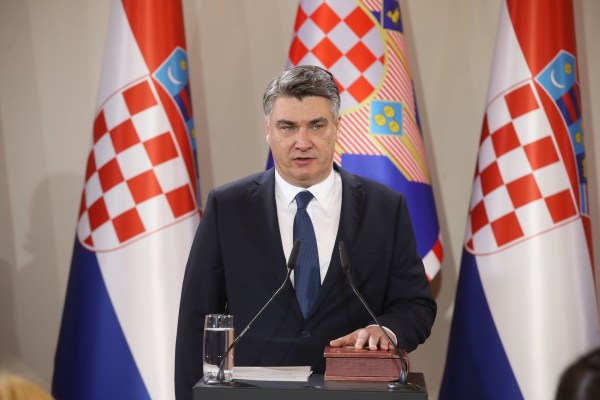
Zoran Milanović as “Presidential Opposition Leader:” More Blessing, More Curse?
by Oliver Kannenberg (Institute for Parliamentary Research, Berlin) The presidential elections were already the third round of voting for Croatian citizens in 2024. Prior to that, early parliamentary elections had been held on 17 April, followed by the European Parliament elections in June. In both cases, the conservative Hrvatska Demokratska Zajednica (Croatian Democratic Union, HDZ),... Continue Reading →
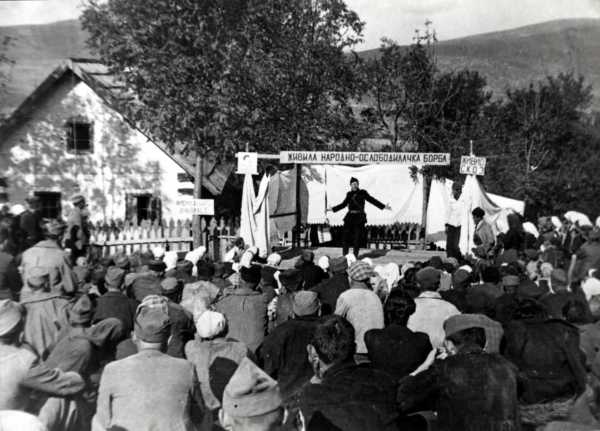
The Power of “The Sunny Side of Fun” in the People’s Liberation Struggle (1941-1945)
by Iva Jelušić “The soul wants rest, and the heart wants joy” (Božović 1984, 194). This is how Saša Božović summed up her thoughts about the summer day of 1943 which included a sports competition, and an evening with “merriment and a theater program.” (Ibid) The sports competition between the several Partisan military units was... Continue Reading →
Europeanization of Balkans through a Multispatial Lens
This article presents the research methodology and approach of the Marie Curie project titled Spatialities of Europeanization in Western Balkans (EURoWEB)[1], which I am conducting at the Centre for Southeast European Studies. The project opens a dialogue between urban studies and Southeast European studies to develop a new multispatial approach to the Europeanization of the Balkans.
Political divisions and ethnic tensions as dominant discourses between Serbia and Montenegro: So what?
Considering the post-Yugoslav context in its broadest sense, current political relations between Serbia and Montenegro can be best described as poor and underdeveloped. The existence of common historical, cultural, and religious features between the two states has not resulted in improving state relations during the post-Yugoslav period. Rather, further antagonism in the relationship prevailed. There were a few occasions and events that have dramatically worsened relations between Serbia and Montenegro during the post-referendum period such as the statements of Serbian high-ranking political officials and dignitaries of the Serbian Orthodox Church (SOC) about the absence of Montenegrin identity, decisions of the Montenegrin government to recognize Kosovo’s independence (2008) and to join NATO membership (2017), the issue of dual citizenship, official participation of the Montenegrin state delegation to the ‘Operation Storm’ celebration in Croatia (2018), etc.