By Seven Erdoğan
Climate change, recognized as a significant threat multiplier, has the capacity to intensify existing risks and vulnerabilities, affecting ecosystems, societies, and economies around the world (Dodson et al., 2020). Its far-reaching impacts have made it an urgent global concern, prompting governments and organisations around the world to reassess their approach to sustainability, risk management, and resilience and to adapt their policies and governance frameworks to address the escalating climate-related challenges. This commentary is about Turkey’s approach to combating climate change. It provides a periodisation of key milestones, challenges and shifts in policy priorities that have shaped the country’s environmental agenda.
Turkey’s engagement with the climate change began in the late 1980s, when the country first participated in global initiatives led by the United Nations (UN), such as the Noordwijk Conference in 1989. During this initial phase, Turkey focused primarily on understanding the complexities of the climate change issue and sought to position itself within the global dialogue on environmental protection and sustainability (TUBA, 2011). This period marked the beginning of Turkey’s journey towards recognising climate change as a critical global challenge, while at the same time seeking to avoid exclusion from the broader international community’s efforts to address the deepening crisis.
The second phase of Turkey’s commitment to climate change started when the country formally became a candidate for European Union (EU) membership in 1999. This was a major turning point and led to far-reaching reforms, extending to environmental policy. This process also made Turkey active in the fight against climate change. During this period, in the absence of a well-established EU climate change regime, the EU pushed Turkey towards greater alignment with the UN climate change agenda. As a result, the country began to take more proactive environmental measures, adopting policies aimed at reducing emissions, improving energy efficiency and enhancing sustainability (Turhan, et al., 2016). This was not done to become green, but to get accepted into the EU. In short, this period and the influence of the EU played a crucial role in deepening Turkey’s understanding of the global climate change agenda.
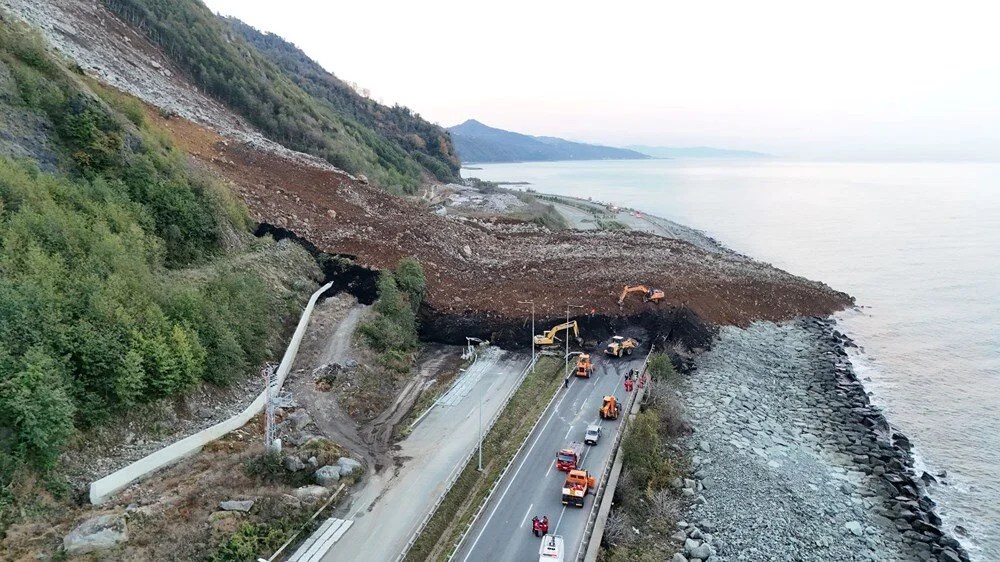
It is difficult to identify the exact starting point of the third period, but it is closely linked to the declining influence of the EU, as a driver of reform. Without the strong EU anchor to advance environmental initiatives, Turkey’s climate policies stagnated. It should be noted that this unfortunately coincided with an increase in the frequency of climate-related disasters such as floods and wildfires across the country, driven by the escalating threat of rising temperatures in the Mediterranean region (Ahmed et al., 2023). During this period, Turkey avoided from implementing transformative policies to reduce emissions and build climate resilience. This reactive attitude led to a six-year delay in the ratification of the Paris Agreement. Due to a lack of domestic motivation and external pressure from the EU, Turkey missed opportunities to make a real contribution to the global fight against climate change.

Photo Credits: www.diken.com.tr
The final period in terms of Turkey’s climate strategy began with the adoption of the European Green Deal (EGD) by the EU in 2019 as a new reset moment for European integration (Schunz, 2022). During this period, the EU anchor of reform did not fully return, but climate conditionality emerged. The country finally ratified the Paris Agreement in 2021, demonstrating its continued commitment to the global climate framework. However, Turkey has not yet adopted the EU’s climate mainstreaming approach. As a result, the country’s climate action during this period has largely been confined to specific economic sectors related to the customs union that has existed between the parties since 1996. This partial and restrictive approach has limited Turkey’s ability to address climate change in a more holistic and systemic way. As a result, the country has not yet fully seized the opportunity to embrace the comprehensive transformations in the EGD.
As the periodisation in this text shows, Turkey’s approach to climate change and its strategy have shown notable weaknesses, particularly in terms of adequacy, implementation and alignment with international environmental commitments, even during periods of greater responsiveness to EU standards. Therefore, despite the country’s growing awareness of climate change, especially after the increasing number of climate-related disasters, the actual policies and actions taken are still insufficient to mitigate the environmental challenges the country faces. Despite the adoption of a net-zero emissions target by 2053, which requires very aggressive emission reductions, the country is still heavily dependent on fossil fuels, there is no real concern for sustainability or environmental protection, political elites are reluctant to respond to calls from civil society groups advocating for environmental protection, and many citizens are unaware of the long-term deadly consequences of environmental degradation. In short, unless Turkey undergoes a significant shift in its climate policy mindset, it will remain ill-equipped and ineffective in tackling the most pressing challenge of the 21st century.
References
Ahmed, N. et.al. (2023). Intensifying Effects of Climate Change in Food Loss: A Threat to Food Security in Turkey. Sustainability, 15(350).
Dodson J.C. et al. (2020). Population growth and climate change: Addressing the overlooked threat multiplier. Science of the Total Environment, 748.
Schunz, S. (2022). The ‘European Green Deal’ – a paradigm shift? Transformations in the European Union’s sustainability meta-discourse. Political Research Exchange, 4(1).
TUBA. (2011). Türkiye Açısından Dünyada İklim Değişikliği. Turkish Academy of Sciences: Ankara.
Turhan, E. et al. (2016). Beyond special circumstances: Climate change policy in Turkey 1992–2015. WIREs Clim Change, 7: 448-460.

Seven Erdoğan is Associate Professor at the International Relations Department of Recep Tayyip Erdogan University and Visiting Fellow at the Center of Southeast European Studies of Karl Franzens Graz University. Her main research interests focus on various aspects of European integration, most recently the role of climate agenda in its external relations, and paradiplomacy.
 Globalising Southeastern Europe
Leave a comment